NOTEBOOK 01THINKING AT THE TABLE
LOOK AT
THE NEXT MOVE.
A better question can change the way you see a game. Compare the choices, trace the costs and leave room for what you do not know.
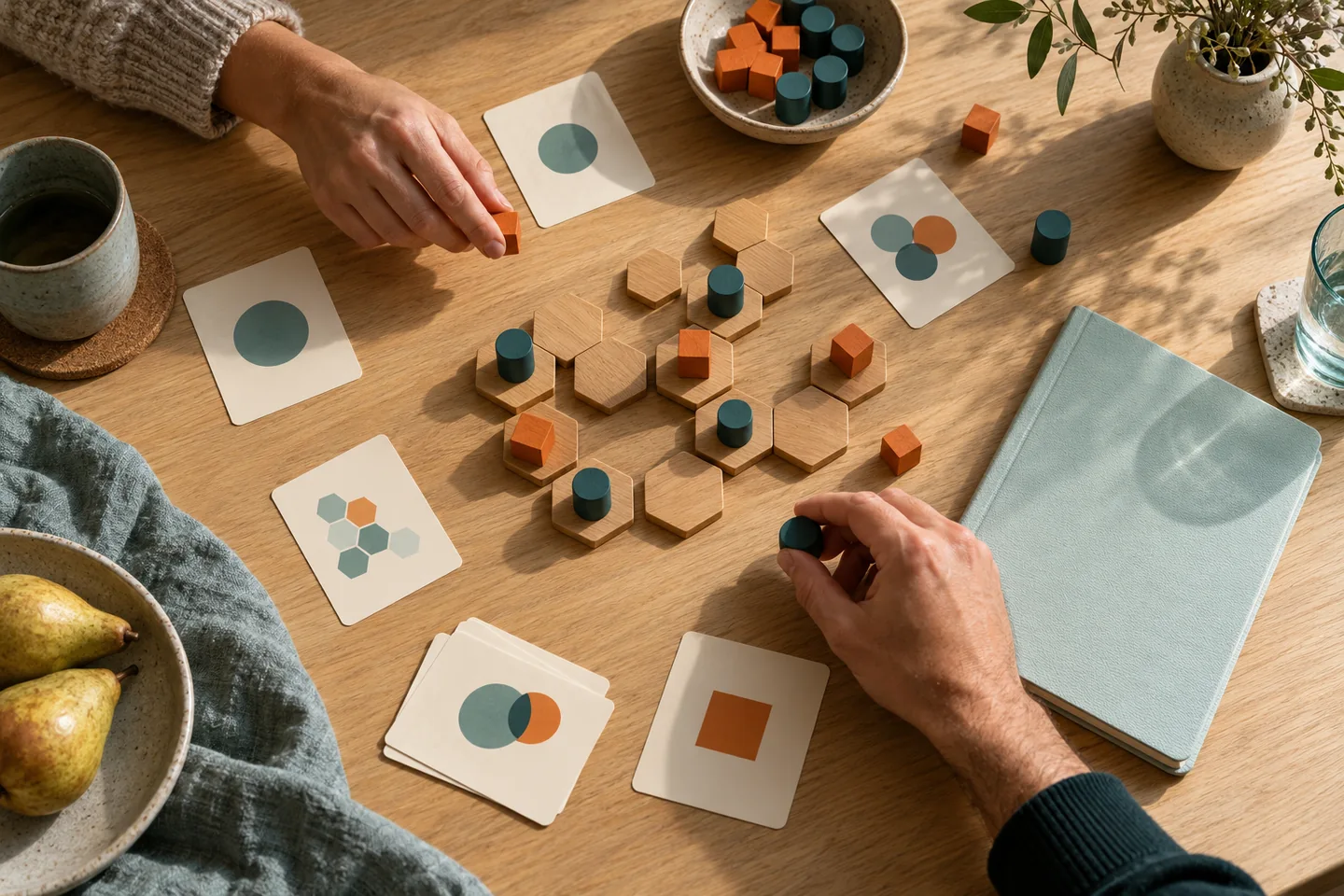
01A USEFUL DISTINCTION
A choice.
A consequence.
Not the same thing.
You choose with the information available at the time. The outcome arrives later. Learning from a game means looking at both without pretending they are identical.
Norelavi is an independent notebook for curious board-game players. Its small exercises make assumptions visible so you can inspect the reasoning.
02THE PLAN COMPARATOR
Same start.
Different possibilities.
Choose two actions for each plan. The tool follows their order, checks their requirements and shows what remains.
Plan A
Plan B
Points and leftover timber measure different things. There is no assumed third action or hidden end-game conversion.
03DRAFTING
The piece you take.
The choices you leave.
A shared selection changes when someone chooses. Look at what an item contributes to your position, and what the remaining offer may mean for later turns.
Understand the draft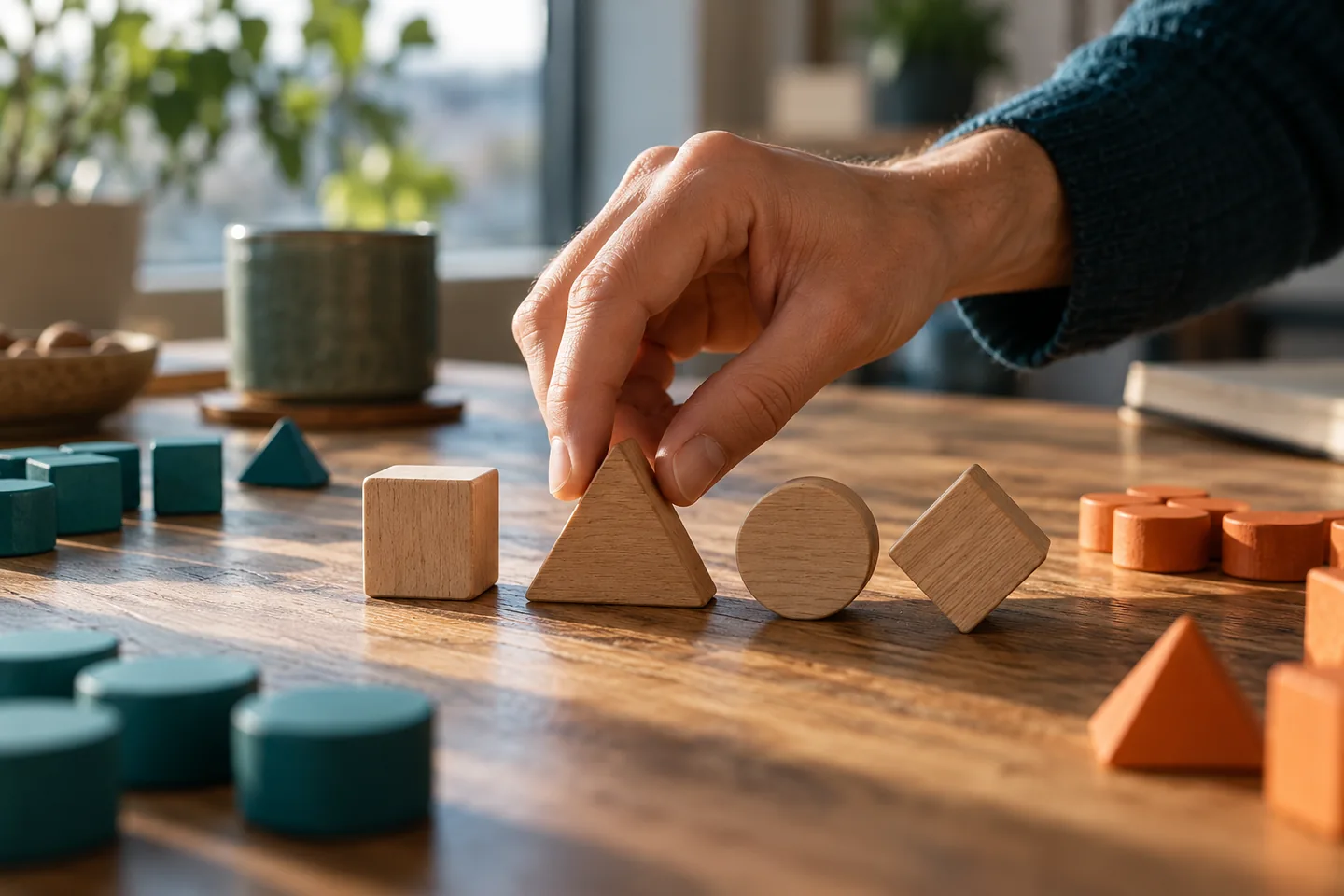
04THREE LENSES
Change the question.
See another angle.
These lenses are prompts for thinking. They do not override a game’s actual rules.
What are you trying to improve?
A move that gains points now may leave fewer options later. Name the horizon and the scoring rule before deciding what “better” means.
What becomes unavailable?
Spending a resource also removes another possible use for it. Count the immediate cost and the choice you are giving up.
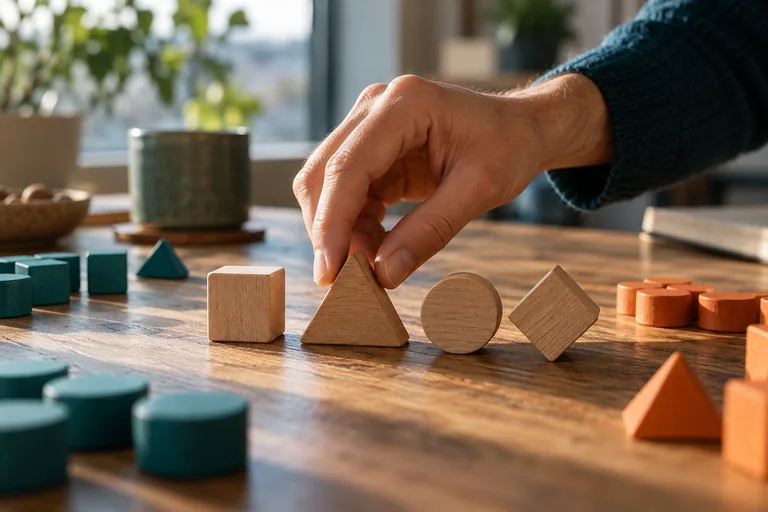
What do you actually know?
Separate public facts, private information and assumptions. A sensible decision can still lead to an unfavourable outcome when information is incomplete.
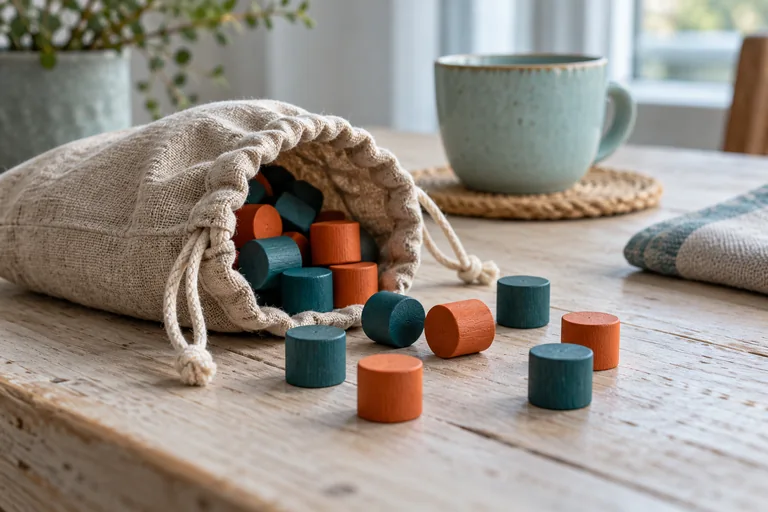
05RESOURCE ECONOMIES
A resource is also
an option you still have.
A pile of tokens is not automatically useful. Its value depends on the actions it permits, the time left and the rule that turns it into an outcome.
Follow the resource trade-off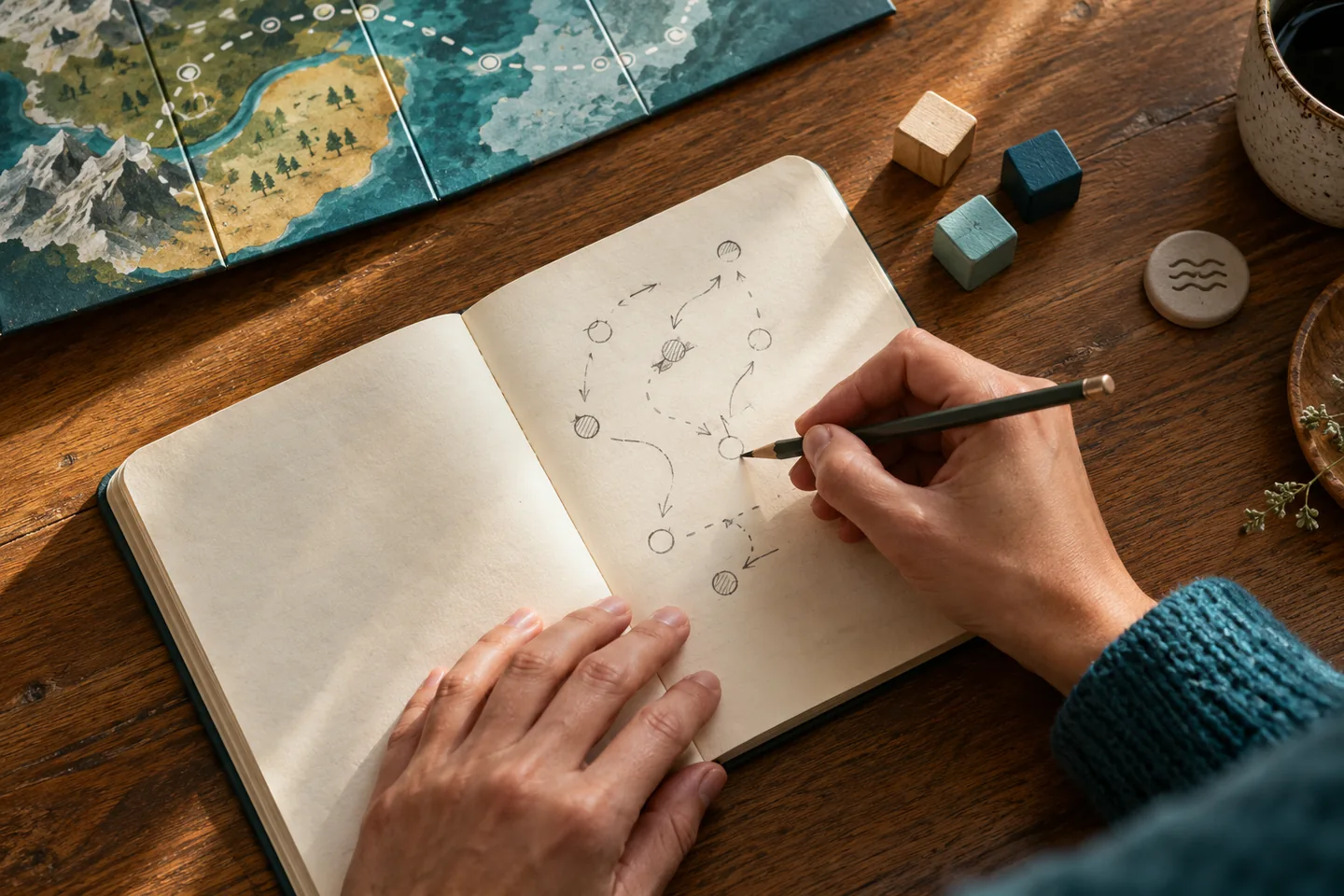
06THE DRAW EXPLORER
Uncertainty can
have a clear shape.
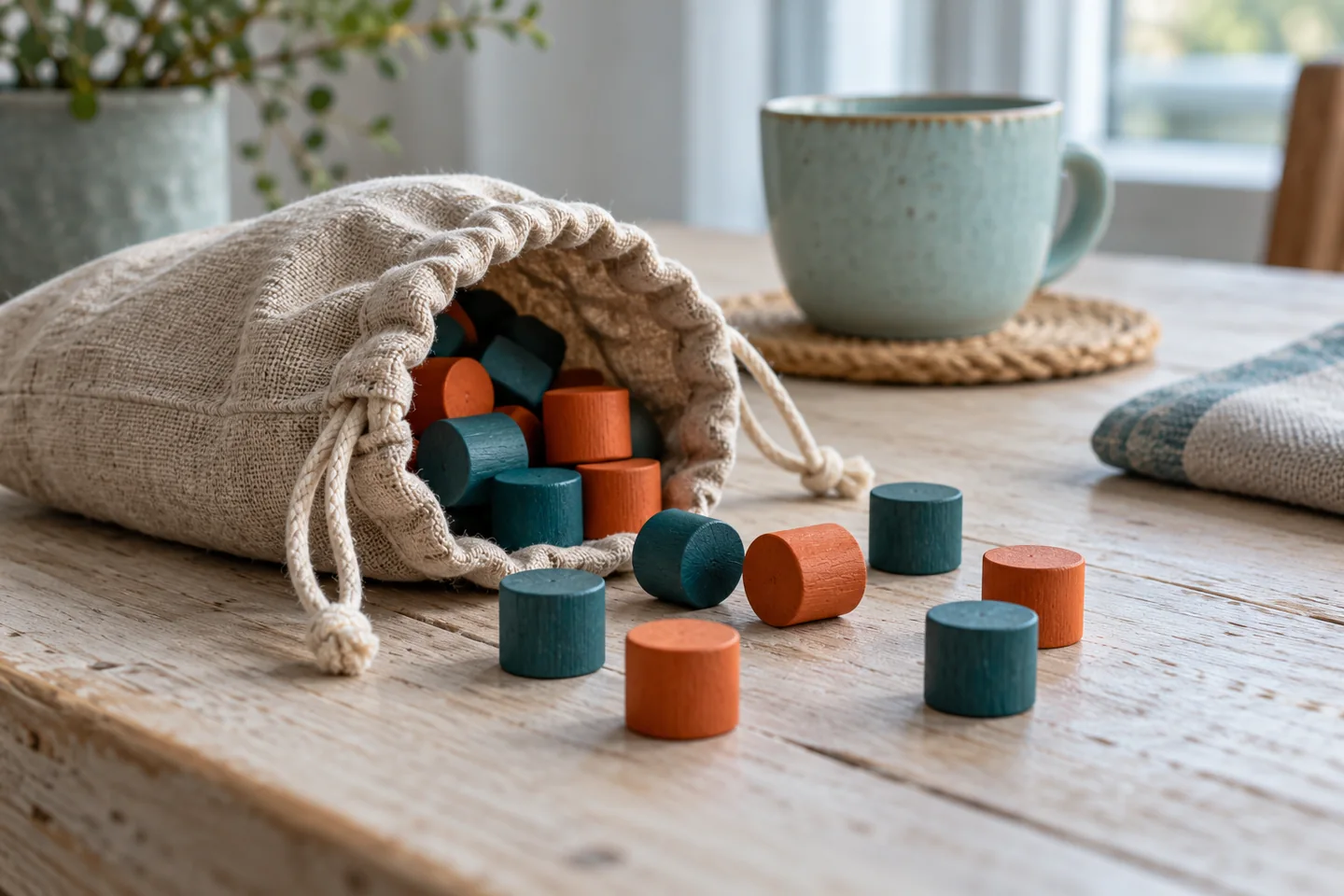
Adjust a fictional bag of tokens. See the exact chance of finding at least one target when drawing without replacement.
Whole tokens only: 0–20 of each type and 1–6 draws. The bag must contain at least as many tokens as you draw.
AT LEAST ONE TARGET
53.3%24 of 45 equally likely unordered samples
Two tokens are drawn without putting the first one back.
07THE MODEL MATTERS
Count what is
actually in the bag.
The calculation assumes a known composition and equally likely draws. If the game changes the bag, returns tokens or lets a player choose, the model must change too.
What hidden information changes08LEARNING RULES
Understand a turn
before memorising an exception.
Find the goal, the ordinary turn and the end condition. Then use a small example to connect the words to the actions players will take.
Build a clear first explanation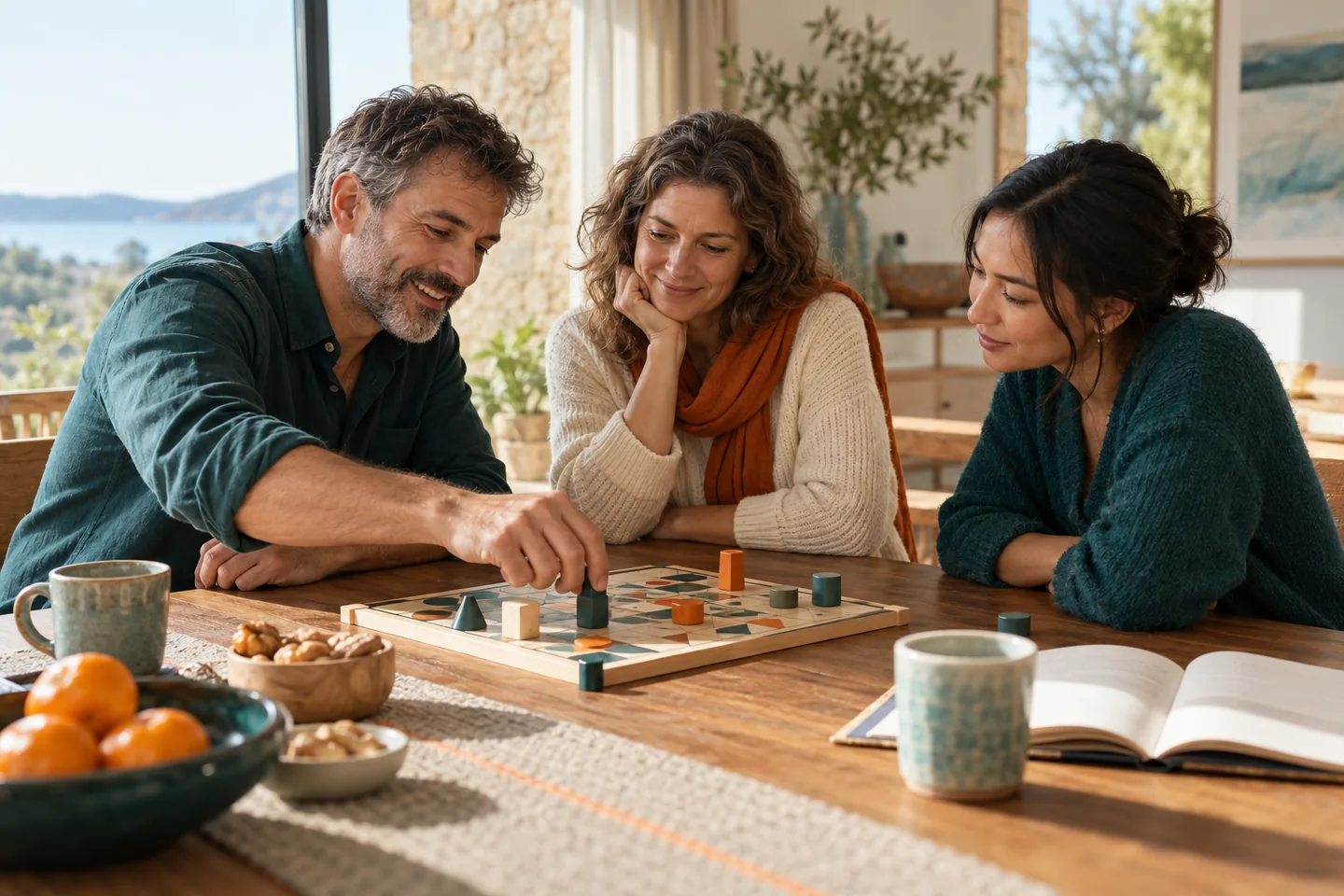
09READ, THEN CHECK
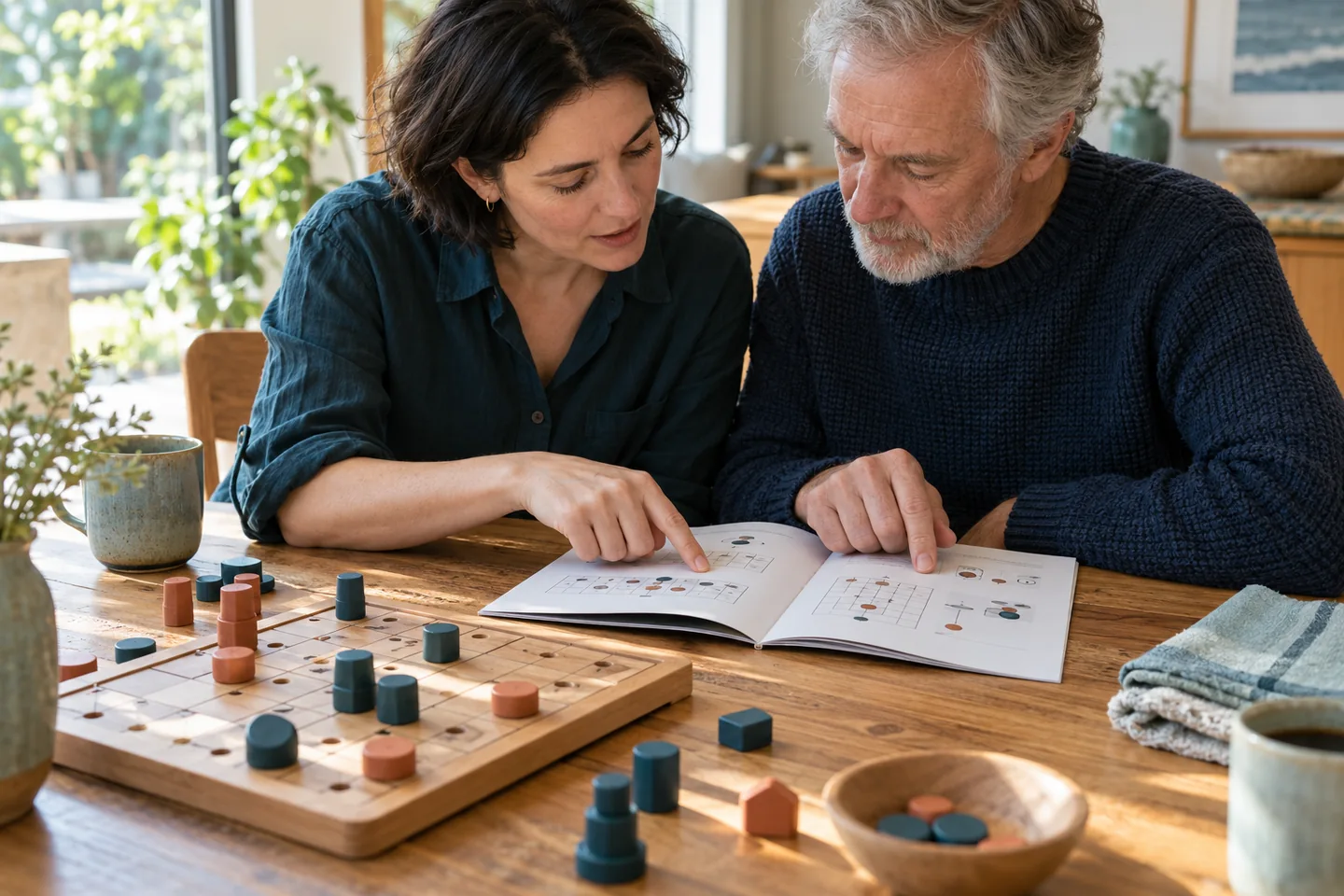
The rulebook
is the reference point.
A remembered rule and a written rule may differ. Pause, find the relevant passage and agree how to handle the discovery before continuing.
Our exercises have their own short fictional rules. They are not interpretations of a published game.
10TWO PERSPECTIVES
Your opponent
sees a different offer.
A visible move can have several reasons. Notice the position and avoid inventing certainty about another person’s intention.
Keep a useful strategy note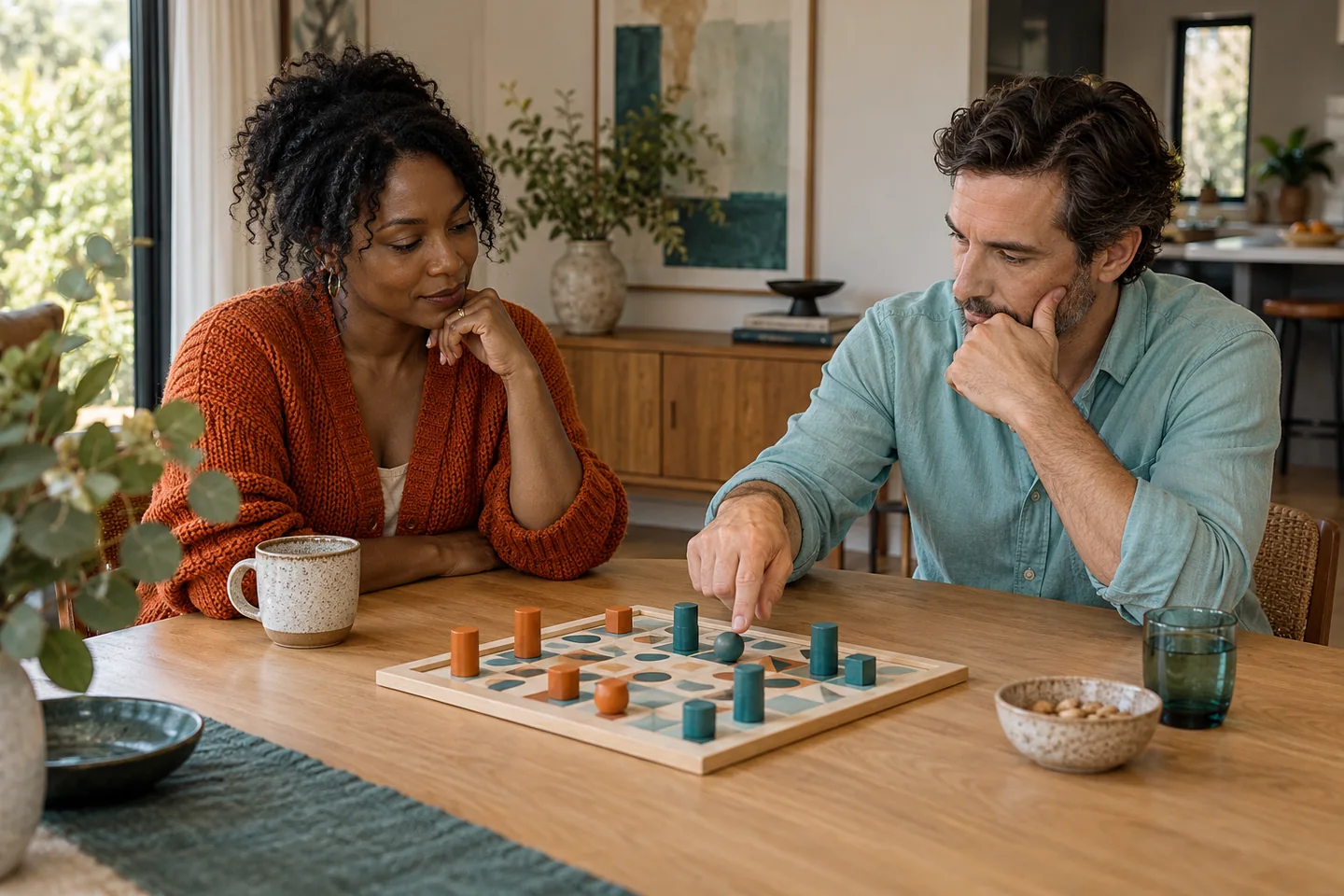
11THE END CONDITION
When does
“later” stop mattering?
A plan needs a horizon. A resource held for a future turn may have little use if the game ends first. Read the ending and scoring rules together.
Resources, timing and the finish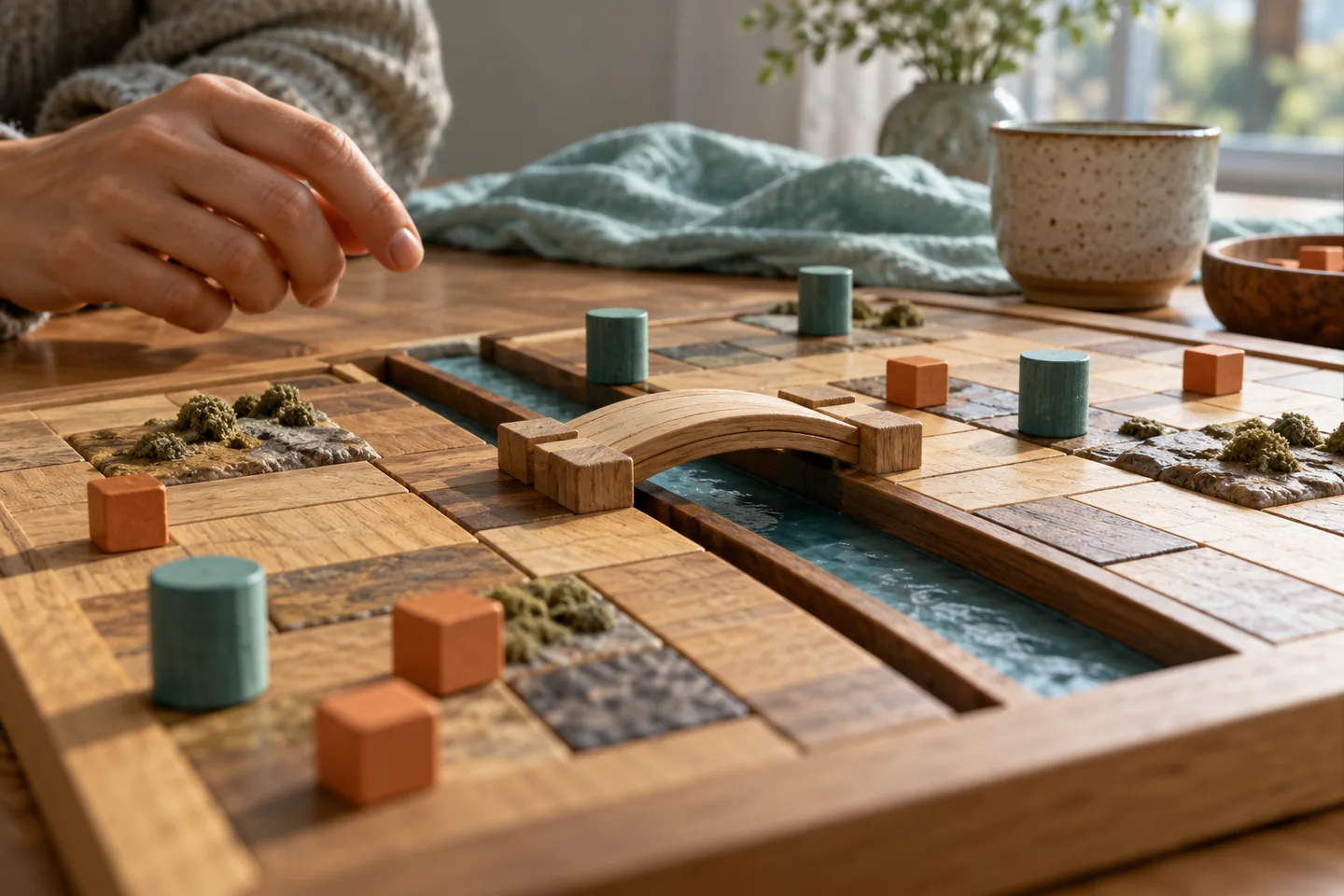
12A NOTE WORTH KEEPING
Write down
the decision,
not just the result.
- The position. What was publicly visible?
- The alternatives. Which choices were actually available?
- The reason. What did you expect each choice to change?
- The update. What did the later outcome teach you?
13LEARN WITH THE TABLE
Curiosity works
better than a verdict.
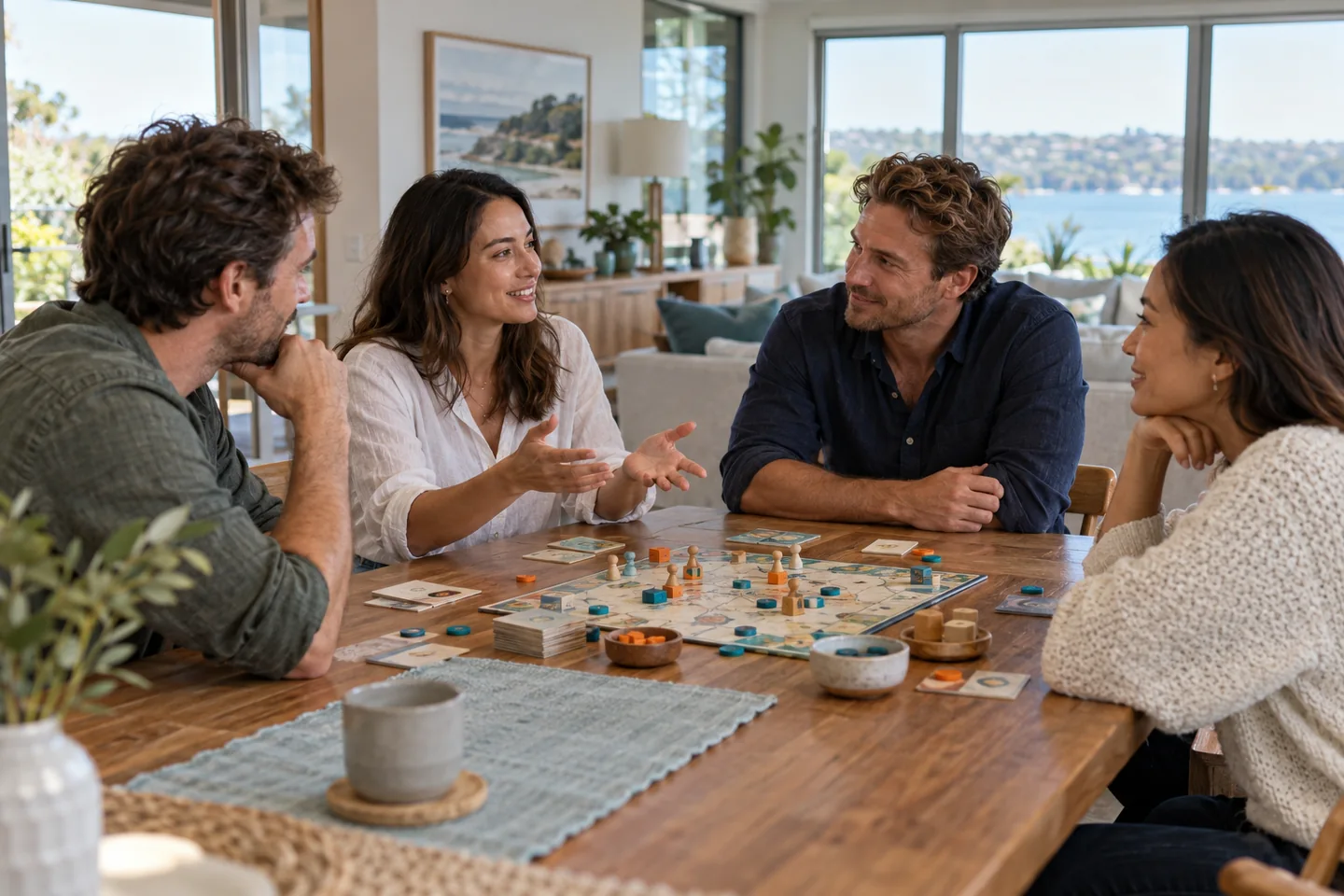
Ask how another player saw the decision. Offer your own reasoning as a perspective, not an answer they were obliged to find.
Make the conversation worth having14THREE TABLE STUDIES
Look closer
at the materials.
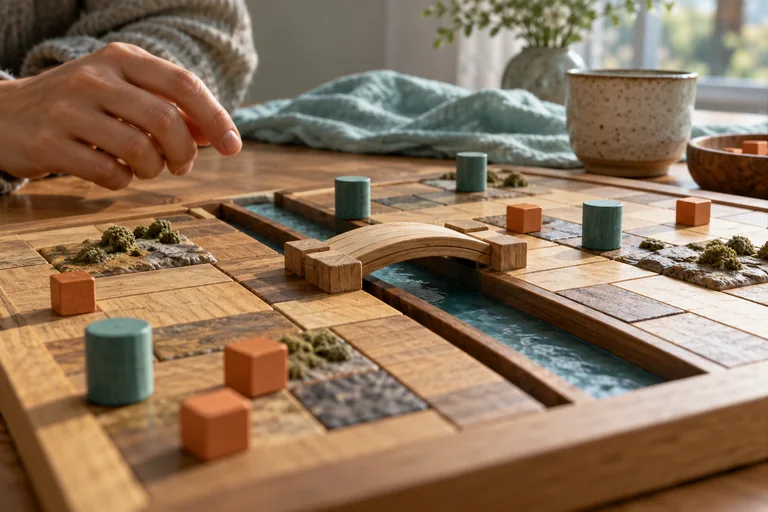
Original illustrative photographs. These are generic components, not a product listing or a record of a Norelavi event.
15BEFORE YOU INFER TOO MUCH
Questions
in the margin.
5 questions available
Are the plan actions from a real game?
No. Gather, Craft, Study and Bridge form an original teaching exercise. Their costs and effects are stated on the tool. They are not a strategy guide for a published title.
Does a higher chance guarantee a draw?
No. A probability describes the model across its possible samples. A single draw can still produce an outcome with a small chance.
Is this a gambling tool?
No money, stakes, purchases or rewards are involved. The explorer is a bounded mathematical illustration using fictional board-game tokens.
Why does my plan stop?
The next action may require more timber or an insight the plan has not obtained. The tool stops there instead of inventing resources or silently skipping the requirement.
Are my choices stored?
The two tools keep their state only in the current page. Reloading resets them. The contact form is separate and saves an enquiry only after a valid submission.
16ADD A QUESTION TO THE NOTEBOOK
Something
does not add up?
Tell us which page, inputs or explanation you were looking at. An exact example helps us understand a correction.
[email protected]Mailbox operation is unverified. Please leave out passwords, account data and other people’s private information.
17KEEP THE NEXT QUESTION OPEN